
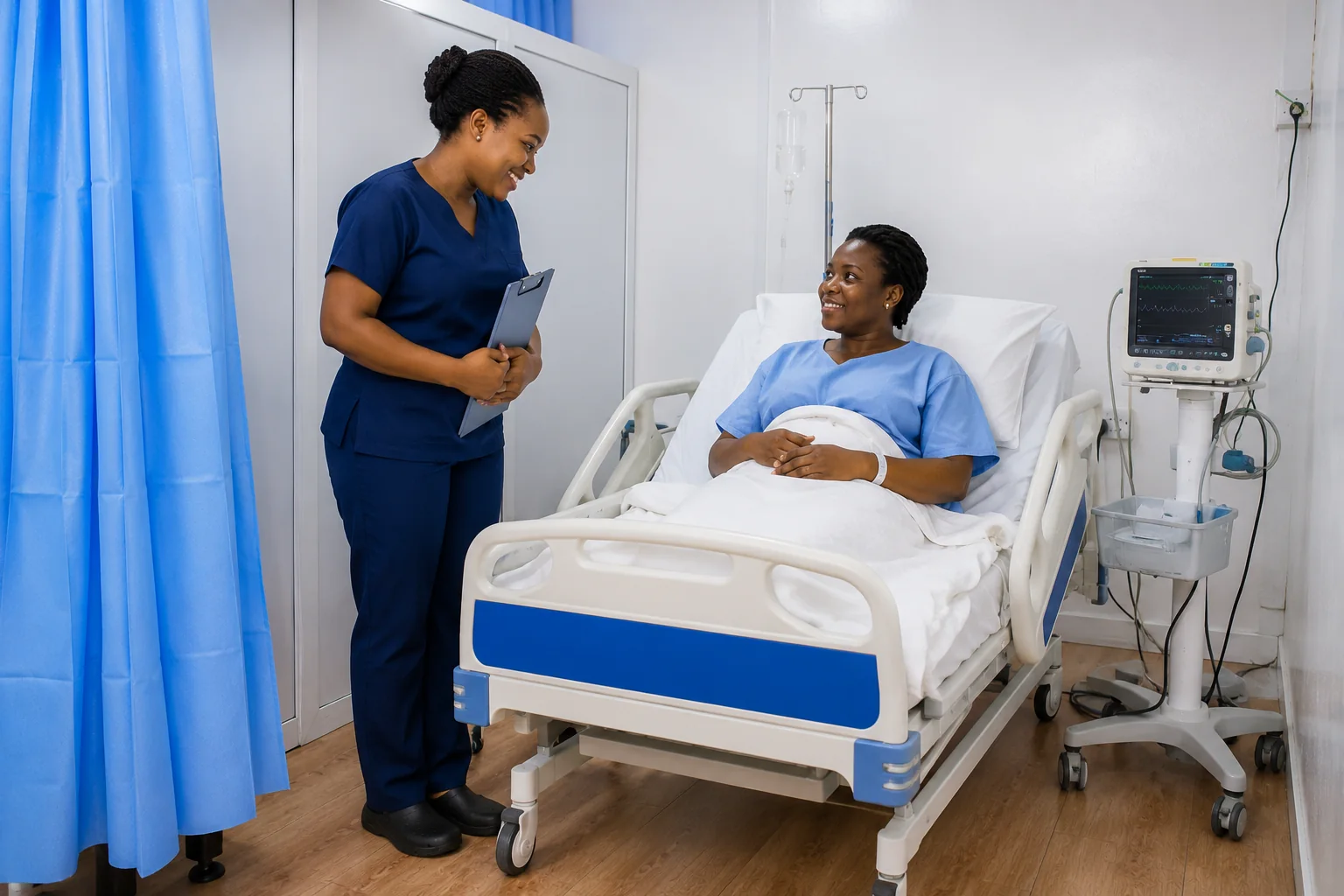
Intensive Care
Continuous monitoring, organ support and one to one nursing for patients who are critically ill or at risk of becoming so.
An intensive care unit is not simply a ward with more equipment. What defines it is the ratio of staff to patients, the continuous nature of the monitoring, and the ability to take over the function of an organ that is failing until it recovers.
Our unit admits patients who need that level of support: after major surgery, after severe trauma, with overwhelming infection, with respiratory failure, with acute kidney injury, or with any condition where deterioration would be rapid and unforgiving if it went unnoticed.
What continuous monitoring actually means
Every patient in the unit is connected to monitoring that runs without interruption, and the numbers are watched rather than merely recorded. Heart rhythm and rate, blood pressure, oxygen saturation, respiratory rate, temperature, urine output and level of consciousness are tracked continuously, and blood gases and biochemistry are sampled at intervals set by the patient's condition.
The purpose is early detection. Most deaths in hospital are preceded by hours of gradual physiological deterioration that nobody was positioned to see. In an intensive care unit somebody is always positioned to see it.
Organ support
Where an organ is failing, we support it while the underlying cause is treated. That is the essential principle of critical care: the machine does not cure anything, it buys the time in which treatment can work.
- Respiratory support, from oxygen through non invasive ventilation to full mechanical ventilation
- Cardiovascular support with fluids, vasoactive drugs and continuous haemodynamic monitoring
- Renal support through haemodialysis for acute kidney injury
- Neurological monitoring and management of raised intracranial pressure
- Nutritional support, delivered into the gut or intravenously
- Sedation and analgesia titrated to the individual patient
Who is admitted
Admission is a clinical decision made by the intensive care team, not an automatic consequence of being seriously ill. We admit patients who need support that cannot be delivered on a general ward, and who stand to benefit from it.
- Post operative patients after major or high risk surgery
- Severe sepsis and septic shock
- Respiratory failure from pneumonia, asthma, chronic lung disease or trauma
- Acute kidney injury requiring dialysis alongside other organ support
- Severe obstetric complications including eclampsia and major haemorrhage
- Major trauma and head injury
- Poisoning and overdose requiring airway protection
- Diabetic ketoacidosis and other severe metabolic emergencies
- Patients deteriorating on a general ward who need escalation
How long a patient stays
There is no standard length of stay, and any figure we gave you would be misleading. A patient admitted for observation after a planned operation may leave within 24 hours. A patient with severe sepsis and multi organ failure may be with us for weeks.
What we will do is tell you honestly, every day, what has changed and what the current expectation is. Where the picture is genuinely uncertain, we will say that rather than manufacture a timeline that reassures you today and disappoints you tomorrow.
Common questions
Is my relative unconscious because of the illness or the medication?
Often it is the medication. Patients on a ventilator are usually sedated because the breathing tube is not tolerable while awake. Sedation is reduced daily to assess the underlying level of consciousness, and the team can tell you which is which.
Can we bring our own doctor to review the patient?
External clinicians involved in the patient's care are welcome to speak with the intensive care team. Care within the unit remains under the intensivist, because critical care depends on a single team holding the whole picture.
Do you take patients from other hospitals?
Yes. The unit accepts referrals from hospitals across Lagos. The referring doctor should call to confirm bed availability before the patient is moved.
Who looks after your relative
Care in the unit is led by our consultant intensivist, with critical care nurses at the bedside continuously and specialist input from nephrology and anaesthesia where the case calls for it.
 Dr Emmanuel NjokuDirector of Critical Care ServicesMeet the team →
What this costs
Cost depends on the level of support actually needed, so we quote rather than publish a rate card. Call the unit and you will be given the current figure, what would change it, and where your HMO cover stands, before treatment wherever the situation allows.
Costs and coverNext step
If you need a bed tonight, call. We will tell you straight away.
The unit is staffed at every hour. Referring clinicians should call before transferring a patient so availability can be confirmed and the team can be ready on arrival.