
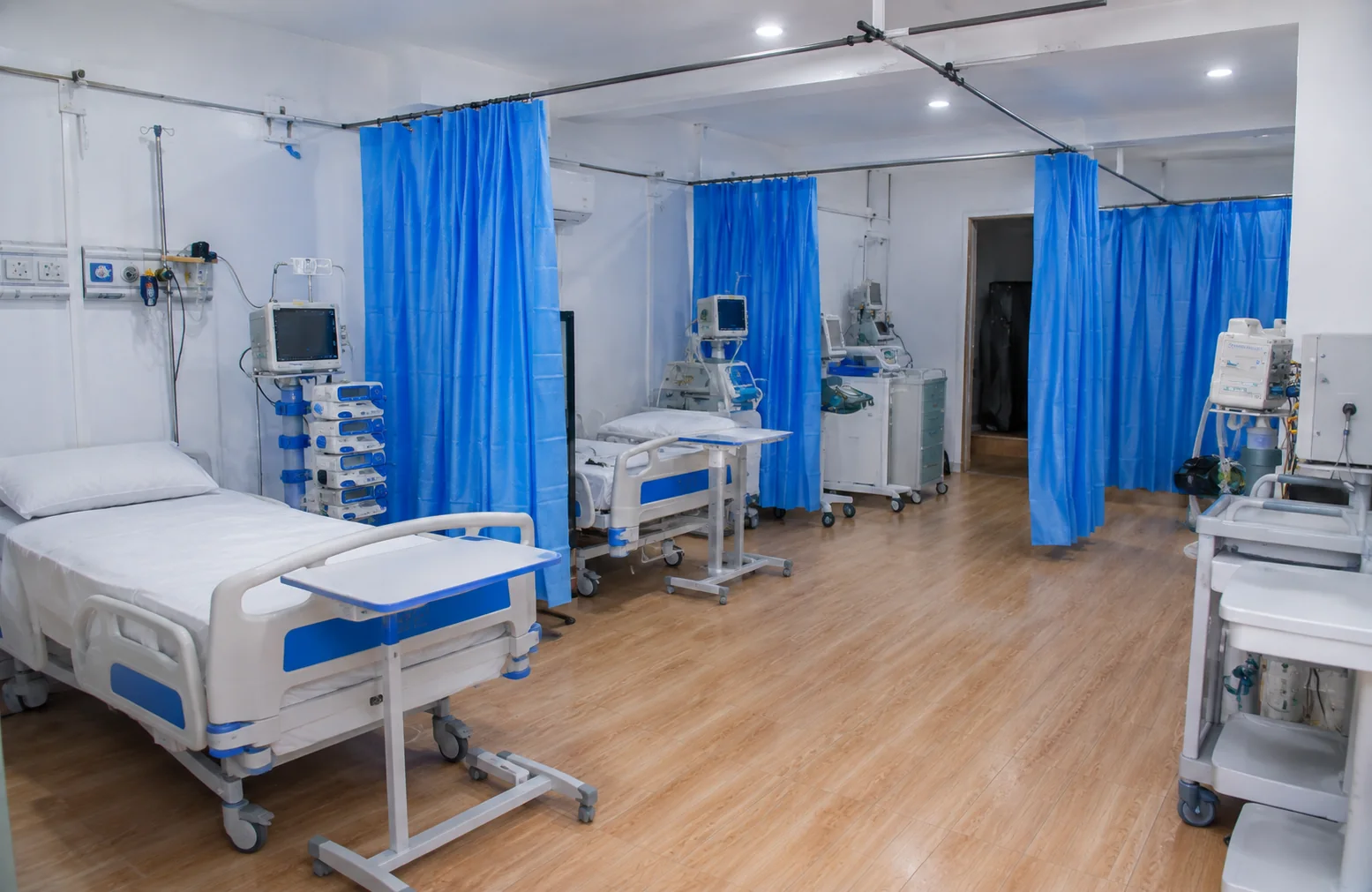
The monitor
The screen above the bed. The green trace is the heart rhythm, with the heart rate beside it. Blood pressure is usually shown in white or red, oxygen saturation in blue and typically labelled SpO2, and the breathing rate in yellow.
Numbers move constantly and that is normal. What matters is the trend over hours, not any single reading, and the staff are watching the trend.
The ventilator
A machine that moves air in and out of the lungs, connected either to a tube in the windpipe or to a tight fitting mask. It does not treat the illness. It keeps oxygen going into the body while the illness is treated.
Patients with a breathing tube are sedated, because the tube is not tolerable while awake. This is why your relative may appear unconscious. It is often the sedation, not the illness.
Infusion pumps
The stack of small units on a pole, each pushing a drug at a precisely controlled rate. Common ones include sedation, pain relief, drugs to support blood pressure, insulin, antibiotics and fluids.
They beep when a syringe is nearly empty. That is a routine prompt to change it, not an emergency.
The dialysis machine
A larger machine with visible tubing carrying blood out of the body, through a filter, and back. It does the work of the kidneys, removing waste and excess fluid.
Seeing your relative's blood in the tubing is unsettling the first time. The volume outside the body at any moment is small and continuously returned.
Tubes and lines
- A central line in the neck or below the collarbone, for drugs that cannot be given through a small vein
- An arterial line in the wrist, giving continuous blood pressure and allowing blood tests without repeated needles
- A urinary catheter, measuring urine output, which is one of the most important indicators of how the organs are doing
- A nasogastric tube through the nose into the stomach, for feeding and for draining stomach contents
- Chest drains, where air or fluid has collected around a lung