
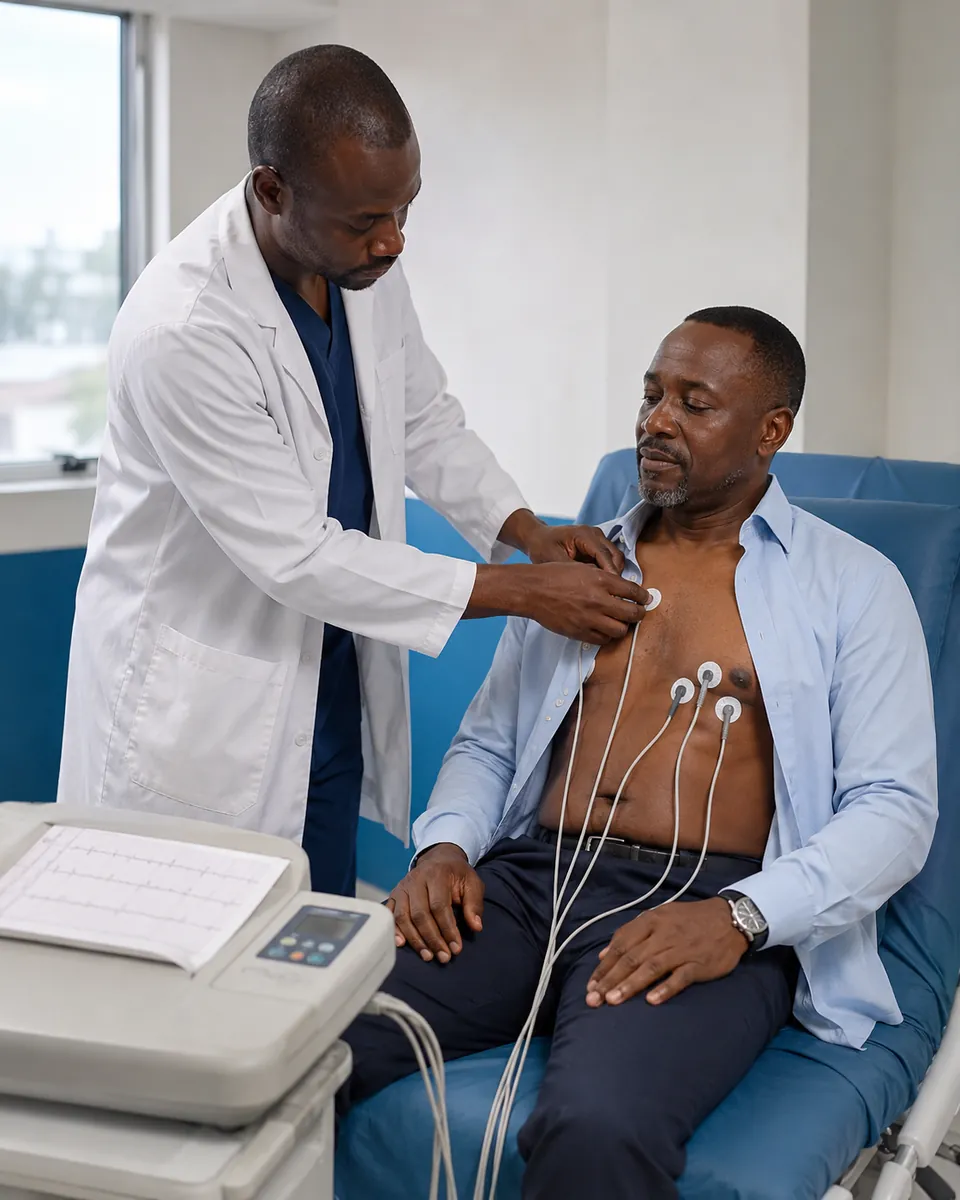
Cardiac and Neurological Monitoring
Continuous monitoring of the heart rhythm and circulation, and structured checks on the brain after stroke, head injury and seizures.
Two organ systems deteriorate faster than any observation round can catch: the heart and the brain. Both are therefore monitored continuously in the unit.
Cardiac monitoring
Continuous electrocardiography detects rhythm disturbances as they happen rather than at the next set of observations. We monitor patients after cardiac events, with significant arrhythmia, with electrolyte disturbances that threaten the heart rhythm, particularly high or low potassium, and any patient on drugs that affect cardiac conduction.
Blood pressure is monitored continuously where the patient requires vasoactive support, which allows the dose to be adjusted minute by minute rather than in response to intermittent readings.
Neurological monitoring
Level of consciousness is assessed at set intervals using a standardised scale, alongside pupil size and reactivity, limb power and vital signs. The purpose is to detect deterioration early, particularly rising pressure inside the skull, which announces itself in a recognisable pattern well before it becomes irreversible.
Patients monitored this way include those after stroke, after head injury, after seizures or status epilepticus, after neurosurgery, and with reduced consciousness of unclear cause.
Managing raised intracranial pressure
Where pressure inside the skull is raised, management is meticulous rather than dramatic: head position, control of carbon dioxide through ventilation, osmotic therapy, temperature control, seizure prevention, and avoiding anything that raises pressure further. Small details, applied consistently, determine the outcome.
Common questions
What do the numbers on the monitor mean?
Ask the nurse at the bedside. They will explain which numbers are being watched for your relative specifically. Not every alarm signals a problem, and many are triggered by movement or a sensor slipping.
Why is the alarm going off so often?
Alarm limits are set deliberately tight so that changes are caught early. Most alarms are the system doing its job rather than an emergency, and staff triage them constantly.
Who looks after your relative
Care in the unit is led by our consultant intensivist, with critical care nurses at the bedside continuously and specialist input from nephrology and anaesthesia where the case calls for it.
 Dr Emmanuel NjokuDirector of Critical Care ServicesMeet the team →
What this costs
Cost depends on the level of support actually needed, so we quote rather than publish a rate card. Call the unit and you will be given the current figure, what would change it, and where your HMO cover stands, before treatment wherever the situation allows.
Costs and coverNext step
If you need a bed tonight, call. We will tell you straight away.
The unit is staffed at every hour. Referring clinicians should call before transferring a patient so availability can be confirmed and the team can be ready on arrival.